Independent SodaTide guide, not the brand's official site. Order links here are affiliate links.
Home / Inulin and Resistant Starch
Ingredient guide · November 2026

Inulin and Resistant Starch: Two Fibers, Explained

What chicory root inulin and potato resistant starch are, how gut bacteria use them, what scientific reviews found, which foods contain them, and how much of each one SodaTide lists.

Prebiotic fiber5 RS typesFood sources
See SodaTide Pricing SodaTide Ingredients
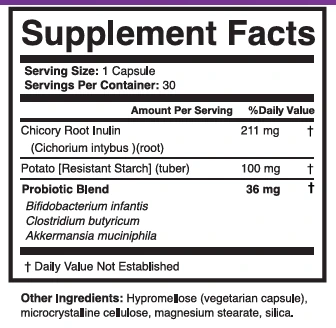
SodaTide Supplement Facts panel listing chicory root inulin and potato resistant starch

Editorial disclosure: sodatideguide.com is an independent guide and is not the manufacturer, distributor or seller of SodaTide. It contains affiliate links, and we may earn a commission if you purchase through them, at no extra cost to you. These statements have not been evaluated by the Food and Drug Administration. SodaTide is not intended to diagnose, treat, cure, or prevent any disease. Consult a healthcare professional before use.

Two fibers

What Inulin and Resistant Starch Have in Common

Both are carbohydrates that the small intestine does not digest. They reach the large intestine intact, where gut bacteria ferment them. ODS uses inulin as its example of a prebiotic, a carbohydrate that gut microbes use. Resistant starch is fermented in the same place and turned into short-chain fatty acids such as butyrate.

Inulin

A chain of fructose units, one of the inulin-type fructans. Chicory root is a natural source, as are artichokes, garlic and onions. Most commercial inulin is extracted from chicory roots, Jerusalem artichoke and agave.

Adv Nutr 2022: inulin-type fructans

Resistant starch

The part of starch that escapes digestion in the small intestine. Some starch resists because it is locked inside whole grains, some because of its granule structure, as in uncooked potato starch, and some because cooking and cooling has changed it.

Adv Nutr 2013: resistant starch
Inulin research

Chicory Root Inulin: What a Systematic Review Found

78 publications

A 2022 systematic review in Advances in Nutrition looked at 78 publications on inulin-type fructans in people.

Bifidobacterium

The most consistent finding was more Bifidobacterium in the gut: 33 of the 35 studies that measured it reported an increase.

Grams, not milligrams

The studies used 2.5 to 50 g a day for one week to two years. Effects on short-chain fatty acids were mixed, and flatulence and bloating were among the effects reported.

Hughes et al., Adv Nutr 2022

Resistant starch research

Potato Resistant Starch and the Five Types

TypeWhy it resists digestionExamples from the 2013 review
RS1Physically inaccessibleWhole or coarsely ground grains
RS2Granular structureUncooked potato starch, green banana starch, high-amylose maize starch
RS3Retrograded after cookingCooked and cooled starchy foods
RS4Chemically modifiedCross-linked starches
RS5Bound to lipidsAmylose-lipid complexes

The review describes butyrate, made when gut bacteria ferment resistant starch, as the main energy source for the cells lining the colon. It estimates average US intake at about 5 g a day. The SodaTide label says "Potato [Resistant Starch] (tuber)" and does not name a type.

Birt et al., Adv Nutr 2013

From food

Getting Inulin and Resistant Starch From Food

Inulin

  • Chicory root
  • Artichokes and Jerusalem artichoke
  • Garlic and onions

Resistant starch

  • Whole and coarsely ground grains
  • Green bananas
  • Cooked and cooled potatoes, rice and other starchy foods
In SodaTide

Inulin and Resistant Starch in SodaTide

One SodaTide capsule lists chicory root inulin (Cichorium intybus, root) at 211 mg and potato resistant starch at 100 mg, the first two lines on its panel, followed by a 36 mg probiotic blend. That pairing of prebiotic fiber and bacteria is why the order page calls SodaTide a synbiotic. The research above used grams of fiber a day, and we found no study of SodaTide itself. The full panel is on the SodaTide ingredients page.

See SodaTide on Its Order Page

Questions

Inulin and Resistant Starch: Questions People Ask

What is inulin?

A fiber made of fructose chains, one of the inulin-type fructans. The small intestine does not digest it, and gut bacteria ferment it further along. ODS names inulin as an example of a prebiotic.

Where does chicory root inulin come from?

From the root of the chicory plant, Cichorium intybus. Most commercial inulin is extracted from chicory roots, Jerusalem artichoke and agave.

What is resistant starch?

Starch that escapes digestion in the small intestine and is fermented in the large intestine, where bacteria turn it into short-chain fatty acids such as butyrate.

Is potato starch a resistant starch?

Uncooked potato starch is one of the examples of type 2 (granular) resistant starch in a 2013 review. Cooking makes most of it digestible, while cooling cooked potatoes forms type 3.

Do inulin and resistant starch cause gas?

Both are fermented by gut bacteria, and fermentation produces gas. Studies of inulin, which used grams a day, reported flatulence and bloating among their effects.

How much inulin is in SodaTide?

211 mg of chicory root inulin per capsule, plus 100 mg of potato resistant starch.

Can I get these fibers from food?

Yes. Chicory root, artichokes, garlic and onions contain inulin. Whole grains, green bananas and cooked-then-cooled starchy foods contain resistant starch.

Inulin and Resistant Starch in One Capsule

SodaTide pairs 211 mg of chicory root inulin and 100 mg of potato resistant starch with a three-strain probiotic blend. Orders from the official page come with a 60-day money-back guarantee. See the SodaTide price page for packs.

Open the SodaTide Order Page